Clear Shade Revisited
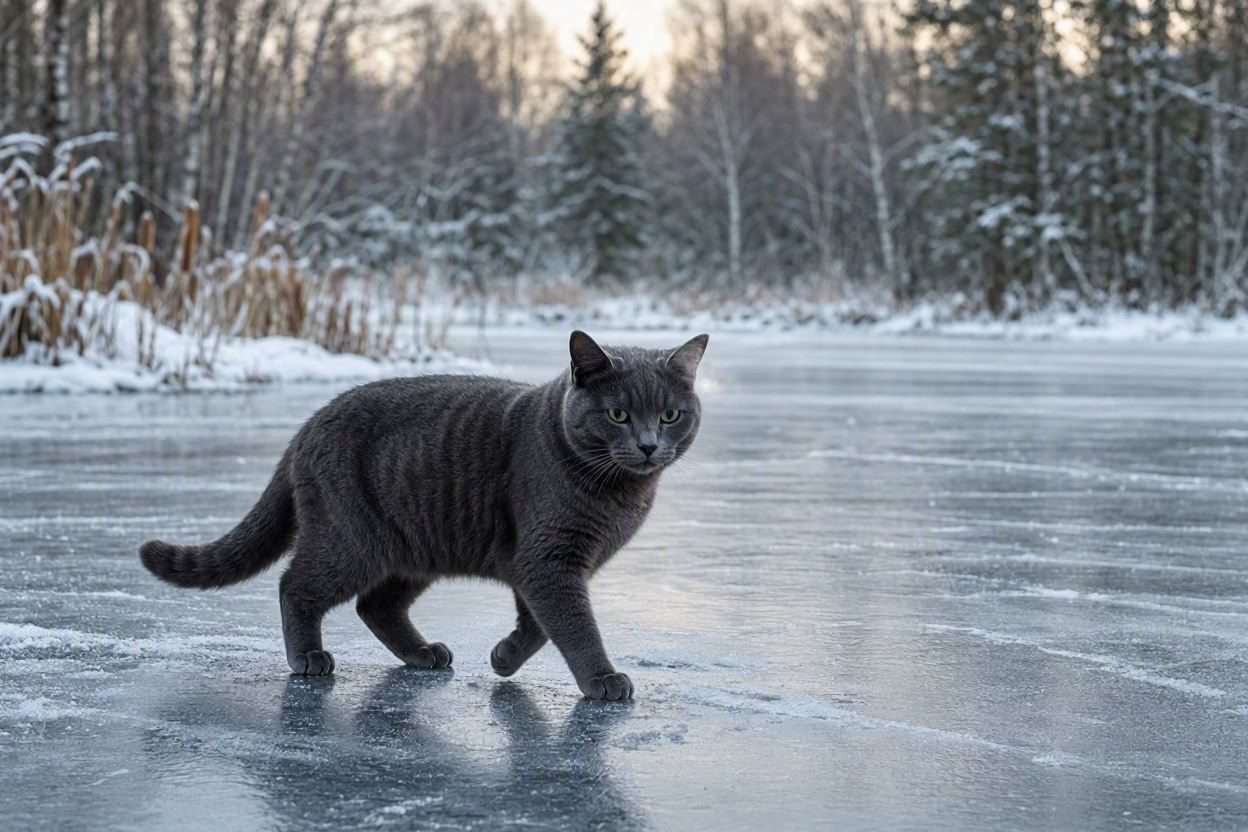
The new year began with some snow. Not much, but enough. Enough to lighten the earth and brighten the gloom with its white.
White, the color of potential, possibility, and new beginnings. The pristine page where an untold story can be written. The clean sheet where a groundbreaking song can be composed. The untouched canvas where a recreated world can be painted.
A better story. A better song. A better world. Changed, fixed, and made whole.
Wonderful then this new year began with some snow. Not much, but enough. Enough to remind me to take heart. That no matter how dark and dismal things get, fresh starts are regularly in sight.
Enough snow too to prompt me to dust off my skis and revisit Clear Shade, the designated wild area situated high on the Allegheny Front of the Allegheny Mountains in Pennsylvania’s Gallitzin State Forest where my favorite cross-country ski trail does its serene wandering. Having completed the trail once again in this latest new year, I can now say I have been skiing Clear Shade for over four decades.
Yet, I am left to wonder if this past visit will be my last.
In any event, it took place on a beautiful day. The sun shone in a cloudless sky. While the ice crystals in the fallen snow sparkled with a clear, brilliant light. It was as though Earth had accepted Heaven’s marriage proposal and was showing off her diamond.
The wind was calm, and the temperature was just right. Cold enough that the snow was a dry powder. There was no melt to make it heavy and sticky. The bottoms of my skis stayed free of frustrating clumps. Gliding was easy.
Nor was there any icing from thaws and refreezes. Klutz though I be, I could successfully control my speed and the accuracy of my turns.
All in all, the snow was so ski-perfect I occasionally found myself imagining I had left solid ground and was in the sky, my feet skating through the dazzling white of empyrean’s twelve pearly gates.
It was cold. But it was not so cold that I was not comfortable. There was no stopping all the time to blow my running nose or wipe my tearing eyes. There was no pausing to pull my hat down to defrost my frontal lobe, my scarf up to warm my breath, or my gloves off to shove my hands beneath my cold-weather gear and into the tropical paradise of my armpits.
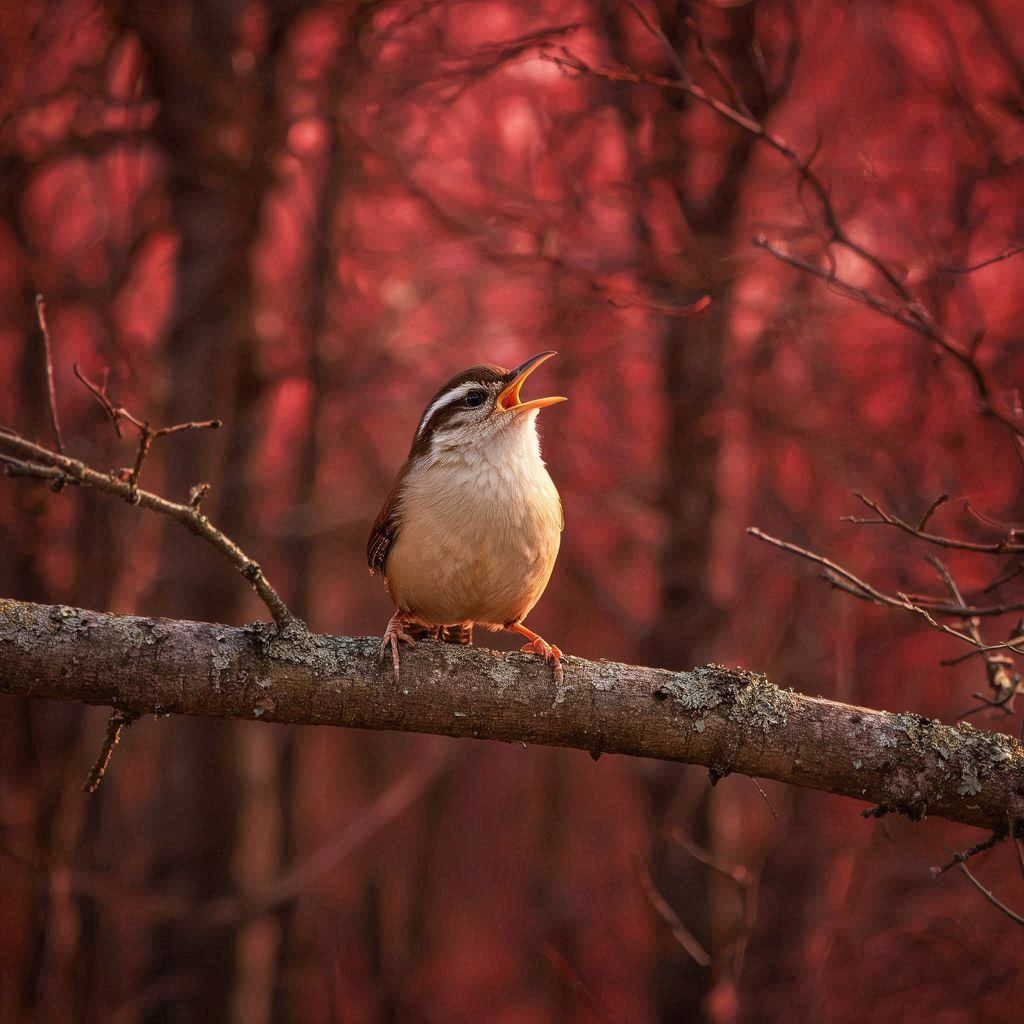
Also lovely was the forest’s lavish hush. Now and again, a wren whistled, a chickadee chattered, or a crow cawed, and once I heard an airplane that was not visible when I looked for it, bringing back a childhood memory of when I believed what I was hearing with nothing in sight was the sound of the world turning at an accelerated speed. Alarmed, I would worry that Earth would lose control and spin so fast it would fall apart, its pieces flung into outer space where I, along with all I had ever known, would be isolated and lost forever in an empty, impenetrable darkness. A day terror product of my little kid imagination that continues to haunt me with its disturbing image of abject desolation and forsakenness.
But it was easy to shake off that old demon as I skied Clear Shade in divine solitude with silence as the prevailing sound. Speaking to me in that still small voice I revere and adore and hear most clearly when I am alone in the natural world. Only to know I am never alone.
Yet, despite the beautiful day, clement weather, picturesque surroundings, and comfort and joy of sovereign quiet, there were obstacles to overcome.
As I said, there was not all that much snow. The hemlocks and other evergreens were not bundled up in their velvet cloaks, but were stripped down to their lace underwear. Scantily clad as well was the trail. A fair number of embedded rocks were exposed. Some marshy spots showed through. Both types of hindrances were relatively easy to maneuver around, but they did break up the rhythm of my ski.
Much more challenging to get past were the seven large, fallen trees lying across the trail at various points. Though they were no surprise. I had anticipated there would be fallen trees to contend with. While snow amounts are decreasing in the Alleghenies, wind speeds are increasing, and that means more fallen trees, as well as other types of land damage and damage to infrastructure too, including homes.
Seasonal temperature shifts, regional topography, and passing weather fronts have long contributed to wind levels in the Alleghenies, and they still do. However, now climate change is also coming into play. Specifically, the jet stream that flows over the mid-to-high latitudes of the Northern Hemisphere and drives the weather here is being altered. While it is true this meteorological phenomenon is still in a state of ongoing analysis, the consensus from scientists is that anthropogenic, or human-induced climate change is the culprit for the jet stream’s mutation.
The world has four main jet streams. Two are in the Northern Hemisphere, and two are in the Southern Hemisphere. These fast-moving, powerful “rivers of wind” are perpetually present five to nine miles up in the atmosphere and generally flow west to east. They exist because when high-altitude warm air masses collide with high-altitude cold air masses, the warmer air rises as the cooler air sinks, and this movement creates a particular form of wind called an air current.
The type of air current that constitutes a jet stream is normally organized, stable, and concentrated. Which is not necessarily true for all of Earth’s air currents. Though all jet streams are air currents, not all air currents are jet streams.
The jet streams are wavy in shape, and they meander much like a winding river. When a portion of a jet stream turns northward, the bend it makes is called a ridge. When a portion dips southward, the curve it forms is called a trough.
Recently above the eastern United States, the polar jet stream atop us has developed an exceptionally large trough. Such unusually deep southward dips are linked to the Arctic’s swift warming, where massive amounts of sea ice are melting because of greenhouse gas emissions of carbon dioxide, methane, and several other gases, all of which trap heat in the atmosphere and raise temperatures worldwide. Not only that, but the loss of the Arctic’s highly reflective white sea ice allows the highly absorbent dark ocean to take in additional solar energy and then release it through evaporation to the air above, thereby warming the atmosphere even more and causing increased melting of sea ice.
It’s a vicious circle that is making the Arctic heat two to four times faster than the global average, and this drastic amplification is reducing the temperature difference between cold northern air and warm southern air that powers our jet stream.
Our jet stream is weakening. It is meandering more than usual, becoming wavier with ridges and troughs occurring more frequently and becoming more prominent and persistent. It is also slowing. Large-scale ridges and troughs can even cause it to stall at times, leading to seemingly interminable weather patterns. Consequently, climate in the Alleghenies, including long-term conditions of wind frequency, intensity, and duration, is changing.
The presence of the pronounced trough currently above us is producing repeated waves of low-pressure systems tracking across the mid-Atlantic region, with each system strengthening surface winds due to steeper pressure gradients. The low-pressure systems are formed as the jet stream exits the trough, where it speeds up and spreads out, leaving a void in the atmosphere. Comparatively warmer air from further down in the atmosphere is then pulled up, filling the void while lowering air pressure near the Earth’s surface. As the air is lifted, the surrounding surface air rushes in to replace it, causing the low-pressure system to further strengthen.
The reason low-pressure systems can cause strong surface winds is because they often have steep pressure gradients. A pressure gradient is the rate of change of atmospheric pressure over a specific horizontal distance. A big pressure change over a short distance makes for a steep pressure gradient, defined by significant atmospheric pressure differences. The pressure differences create a pressure gradient force that accelerates the air, forcing it to rapidly move from high-pressure areas to low-pressure areas.
Along with everything else already mentioned, sometimes the Northern Hemisphere’s polar vortex gets into the act. A polar vortex is a band of strong, cold wind spinning counterclockwise ten to thirty miles above the Earth’s surface. The world has two polar vortexes. One is above the North Pole. The other is above the South Pole.
Our polar vortex above the North Pole, like our polar jet stream below it, is being destabilized due to the Arctic’s intensified warming. More frequently now it slides off the pole, stretches, or splits into two or three rings. Arctic air can then descend southward and reinforce the jet stream’s dip.
In summary, the warmer the Arctic, the weaker our jet stream. The weaker our jet stream, the more apt it is to meander with more and larger ridges and troughs, as well as being more prone to stalling. More and larger troughs mean the likelihood of more low-pressure systems that may persist for long periods. The more low-pressure systems, the more probable steep pressure gradients. The more steep pressure gradients, the more exceedingly powerful pressure gradient forces. The more exceedingly powerful pressure gradient forces, the more high winds. And the more high winds, the greater the possibility of damage to land and infrastructure, including homes.
I must admit the idea that the arrival of fierce winds in Pennsylvania’s Allegheny Mountains is related to the disappearance of sea ice in the Arctic Circle can seem preposterous. The notion feels like something out of a bizarre, irrational, disjointed dream. Yet I believe it. I believe it because the harsh truth is, each step from Arctic ice to Allegheny wind logically follows the previous one so that, in the end, the connection makes perfect sense. Therefore, though the wind was but a playful breeze during my recent new year’s ski, violent winds, along with the danger they pose and the destruction they can cause, are evidently here in the Alleghenies for an indefinite stay.
Incidentally, I have not even touched on the disrupted jet stream’s effect on temperature and other weather conditions. Nor have I gotten into the various other atmospheric and oceanic processes that are also being impacted by climate change. Simply put, the news on all those fronts is not good either.
Returning to my highlight of the wind, I guess I must become more adept at climbing over large, fallen trees. Either that or give up enjoying my favorite cross-country ski trail. Which I hate to admit is a serious consideration. Because I cannot deny struggling across the trees lying on Clear Shade’s trail rattled me.
Granted, the fact that I refused to remove my skis added to the difficulty. Stubborn as an ass, I conquered all seven of those tree obstacles with my skis locked to my feet. Which made for some rather inelegant moves. Although in getting over tree number four, I accomplished – albeit through no volition of my own – the gymnastic split that so eluded me in high school.
It was an exemplary split too. Although excruciatingly painful for a woman well past her limber youth. My anguished screams and angry swearing are probably still rolling through Father Gallitzin’s forest, across the Allegheny Front, and into the Arctic. Reverberating in the ears of wild critters from here to there. Piercingly broadcasting me a potty-mouthed nincompoop to white-tailed deer and caribou, cardinals and puffins, rainbow trout and beluga whales, American Bigfoots and Arctic Tornits.
How I ever got out of that split and back atop my skis, I shall never know. However, when I was subsequently confronted with large, fallen trees numbers five, six, and seven, I totally get why I still would not do the sensible thing and take off my damn skis.
My absurd mulishness was because of a perilous incident I had previously experienced while skiing Clear Shade. It happened back when the Alleghenies regularly got more snow than is typical at present. There was probably a good two feet on the ground that day, and more snow was falling. The air was bitter. The wind wailing like a banshee. The trees shuddering, as if in horror at the spirit’s grim declaration. Their trunks creaking, cracking, and popping. It made me wonder if they were trying to uproot and run from the inevitable.
As for the fine feathered friends of Clear Shade, not one let out so much as a peep. All literal birdbrains were undoubtedly hunkered down, waiting out the storm. I should have heeded their wisdom. Yet I was not about to miss a chance to ski. So, off I went into the woods. Solitary and proudly reliant on only myself.
Self-reliance is something I greatly prize. I like the realization that no one will come to my rescue. Should I get into a jam, I must figure a way out of it on my own and work solo to do everything it takes to extract myself. For I am the only one who will save me.
At the most basic level, I find self-reliance exhilarating. A vitality booster that helps prevent laziness and helplessness. However, it does have its downside.
As I demonstrated that fateful, blizzardy day in Clear Shade. What happened was, about halfway through my trek, one of my skis came off, and for the life of me, I could not get it back on. The snow was so deep. It came up well past my knees, and my unbound ski kept sinking and disappearing into mounds of feathery fluff. From which I dug it out time and time again. Though it was like retrieving an errant twig from a mountain of goose down. Then after brushing off the countless clusters of flakes with my increasingly numbing hands, I would try and try to get my boot to grip the binding securely enough to fasten itself in place. Only to fail and lose the unruly ski once again to the merciless snow.
Not a very impressive predicament, I know. It’s embarrassing. I wish I had a more spectacular crisis to tell, a plight full of exciting drama, intrigue, and action, but that is what happened. My ski fell off, and I could not get it back on.
After multiple misses, I gave up, took off my other ski and started to walk the last few miles of the trail. To put it mildly, trudging through all that deep snow was exhausting. So exhausting I eventually gave up on that as well. At which point, it occurred to me that I might not make it out of there.
I should have been frightened. But I wasn’t. I felt remarkably calm, and all I wanted was to sleep. I lay down in the snow and began to drift off. But right as I reached the place between awake and asleep – that mystical borderland where the conscious and the subconscious play tag in a misty wood – something amazing happened.
A woman who is very dear to me materialized out of the storm and inspired me to get up and keep going. The experience was similar to what happened when I was lost during a hike in Idaho, and my uncle saved me. Although during the Idaho incident, I was wide awake. For what went on in Clear Shade, I was in a surreal daze. And while my uncle’s message to me was conveyed in blunt words, hers was communicated in cryptic action. I have yet to grasp what she meant when she smiled knowingly and, without a word, gently tugged up my tossle cap and held the baby pink interior of a conch shell to my ear.
I am pretty sure the conch shell she held was the Queen Conch that sat on my nightstand when I was a young girl. Back then, I was captivated by that rosily whorled treasure from the deep, but had long since forgotten it. And what a seashell could possibly have to do with the adult me defeated and stranded in an Appalachian winter wood, I still cannot fathom.
But the lady who put it to my ear must have known what she was doing. Because something in the rhythmic rolling roar I heard in the shell’s sublime heart awakened my survival instinct, motivating me to push myself up from the snow and continue to fight my way out of the mess I had gotten myself into. Obviously, as I am no ghost – at least not yet – I made it.
My best guess is the loved one who saved me during the Clear Shade adventure was a hallucination. Still, I don’t really know. What I do know for certain is that I am grateful. Grateful for both the Idaho and Pennsylvania rescues. Not only because they delivered me from harm – or worse – but because they have blessed me with a humble uncertainty as to how self-reliant I truly am. Hopefully those double doses of doubt are enough to give me some pause when I need it.
I thought about that as I ended my most recent cross-country ski and left Gallitzin State Forest for home. Getting across those seven fallen trees while accompanied by a chilling memory did rattle me. Yet I cannot imagine giving up something that is so me. Just where would I be then?
Of course, it might help solve my conundrum if I would call up my courage and get over the fear of removing skis before climbing trees. Especially when the snow is not very deep and easily walkable. Again, I’m embarrassed. My ski overattachment must be off the charts. That is, of course, if there is a chart for ski overattachment. Which I somehow kinda doubt. So perhaps I have invented a new mental illness. I wonder if some brilliant psychologist will name it after me, and I will be famous. Or, more plausibly, infamous.
Much more important than what the future holds for me, however, is what the future holds for Clear Shade, the surrounding Gallitzin State Forest, and other wilds in the Alleghenies, Pennsylvania, Appalachia, and elsewhere. I worry, and I believe I have legitimate reason to worry, that the vast majority, if not all, could be taken away. Many gone, perhaps even in my own lifetime.
Industrial greed is the culprit. Something Pennsylvania, including the Allegheny region, is no stranger to. Much of Pennsylvania’s idyllic landscape has been heavily degraded for centuries by the extraction industries of timber, coal, oil, and gas, as well as numerous manufacturing industries and, last but not least, climate change, the largest percentage of which is caused by industrial pursuits. So it is that God’s country is made by man a godforsaken wasteland.
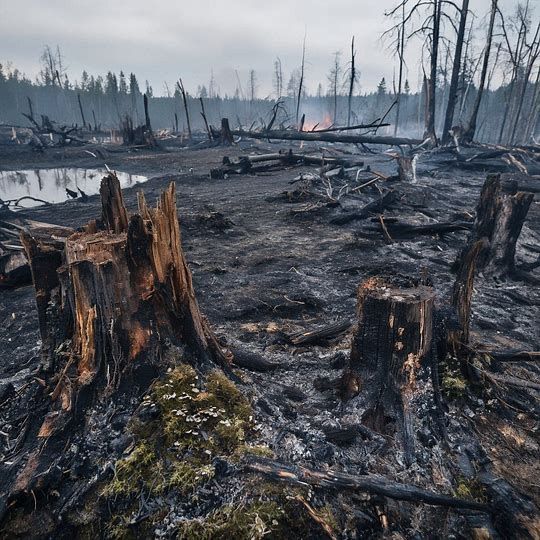
Clear Shade Wild Area and Gallitzin State Forest are prime examples, having been heavily logged in the late 19th and early 20th centuries in sacrifice to the timber and iron industries. By the time lumber barons were done pillaging the primeval woods, all that was left were rotting stumps and scorched, sterile earth from severed, dried-out treetops fueling massive wildfires, baking the ground and destroying soil nutrients. What had once been a gorgeous wilderness teeming with life was left an ugly, barren hellscape.
Luckily, however, there were people who cared. Among them was Joseph Rothrock, “Pennsylvania’s Father of Forestry.” Because of his advocacy and the advocacy of others, forest restoration projects were established for Pennsylvania’s most desecrated lands. In 1916, the Pennsylvania Department of Forestry took control of what would become Gallitzin State Forest, including Clear Shade Wild Area. While the wild area took its name from the Clear Shade Creek flowing through it, the state forest was named for the Russian prince and 19th century Catholic priest, Father Dimitri Gallitzin.
Lovingly known as the “Apostle of the Alleghenies,” Father Gallitzin was a superior man who, though born to tremendous wealth and social standing – his godmother was Catherine the Great – never became hooked on money, fame, or power. Instead, he relinquished his inheritance and spent the better part of his life administering to the Allegheny poor, spending what finances he had on their welfare. He died in relative poverty, but rich in spirit, proving as he did that it is possible to come into intimate contact with money and still not catch the money disease. The addiction that brings to spiritual ruins so many good people.
Over the years, the forest that had been so violently ravaged returned and is now as magnificent, wild, and natural as it ever was. However, the miracle of rebirth that is Gallitzin State Forest and its Clear Shade did not happen without a lot of human help. I wonder if today there are such devoted and savvy champions and stewards of Pennsylvania’s woodlands.
We sure do need them. In no small measure because climate change is rearing its ugly head in Gallitzin, Clear Shade, and our other wilds too, generating severe weather events and the warming that is destroying habitats and ousting native species native.
Then there is the industrial activity that remains furiously alive and well in Pennsylvania, exacerbating climate change and destroying the environment further through hazardous waste generation, pollution of air, water, and soil, and over-extraction of natural resources. Each year, from the state’s tens of thousands of producing wells, over seven trillion cubic feet of natural gas are extracted and roughly seven million barrels of crude oil are taken. While from Pennsylvania’s hundred or so coal mines, around fifty million tons of coal are removed. Besides the extraction industries of gas, oil, and coal, there are approximately seven hundred Pennsylvania mineral mines. As for the commonwealth’s manufacturing industries, there are currently over thirteen thousand firms.
In rapacious company with the above environmental offenders are the one hundred or so data centers currently in Pennsylvania, with many more planned. Data centers are warehouses for computers that serve the internet. They can be enormous, with some over a million square feet, the size of more than seventeen football fields. Obviously then, they require large chunks of open land. They also use huge amounts of electricity. While vast quantities of water are necessary to meet their extreme cooling needs.
With over eighty-six thousand miles of waterways, Pennsylvania is water rich. Our plentiful water, massive energy infrastructure, and expansive amounts of rural land, plus some other features, make our state a highly attractive destination for data centers.
Between the interrelated, devouring monsters of climate change and industrial schemes, I fear for wildernesses like Gallitzin and Clear Shade. Moreover, I fear for all of Pennsylvania, Appalachia, and the entire world too. Sometimes I wonder if that old childhood day terror of mine – that horrifying vision of Earth spinning out of control, falling to pieces and into desolation and forsakenness – I wonder if that specter was really a warning look at the future.
Except that the reality is, Earth spinning out of control is not the problem. We are the problem. We are the ones who are spinning out of control, and we are risking everything falling to pieces on us. We are risking desolation and forsakenness. And all because of greed.
On that account, I suspect I will continue to ski Clear Shade. Even when threatening obstacles obstruct my path. I will do so because I cannot help but believe that in some admittedly miniscule way, by virtue of my awed appreciation of the natural world, I am standing up for the glorious creation that was given to us for free. The place where the still small voice carries more weight and has more true power than the loudest voice in the room. The blaring bellow of greed.
No matter how dark and dismal things get, I remember that hope never abandons. In this supreme truth, I take heart. The world can still be changed. It can be fixed and made whole. Fresh starts are regularly available. At least for now.
Credit: Bing Image Generator
Share this post via